You know that moment on a production floor when the conveyor keeps moving but your automation can't quite keep up with the rhythm? That gap — between a line that's always in motion and a robot that thinks in fixed coordinates — has historically been one of the stubborn ones for non-technical teams to solve. Now, according to Business Wire, Hirebotics is taking another swing at it by bringing line tracking and linear rail capabilities directly into its no-code Beacon platform.
What actually changed inside Beacon
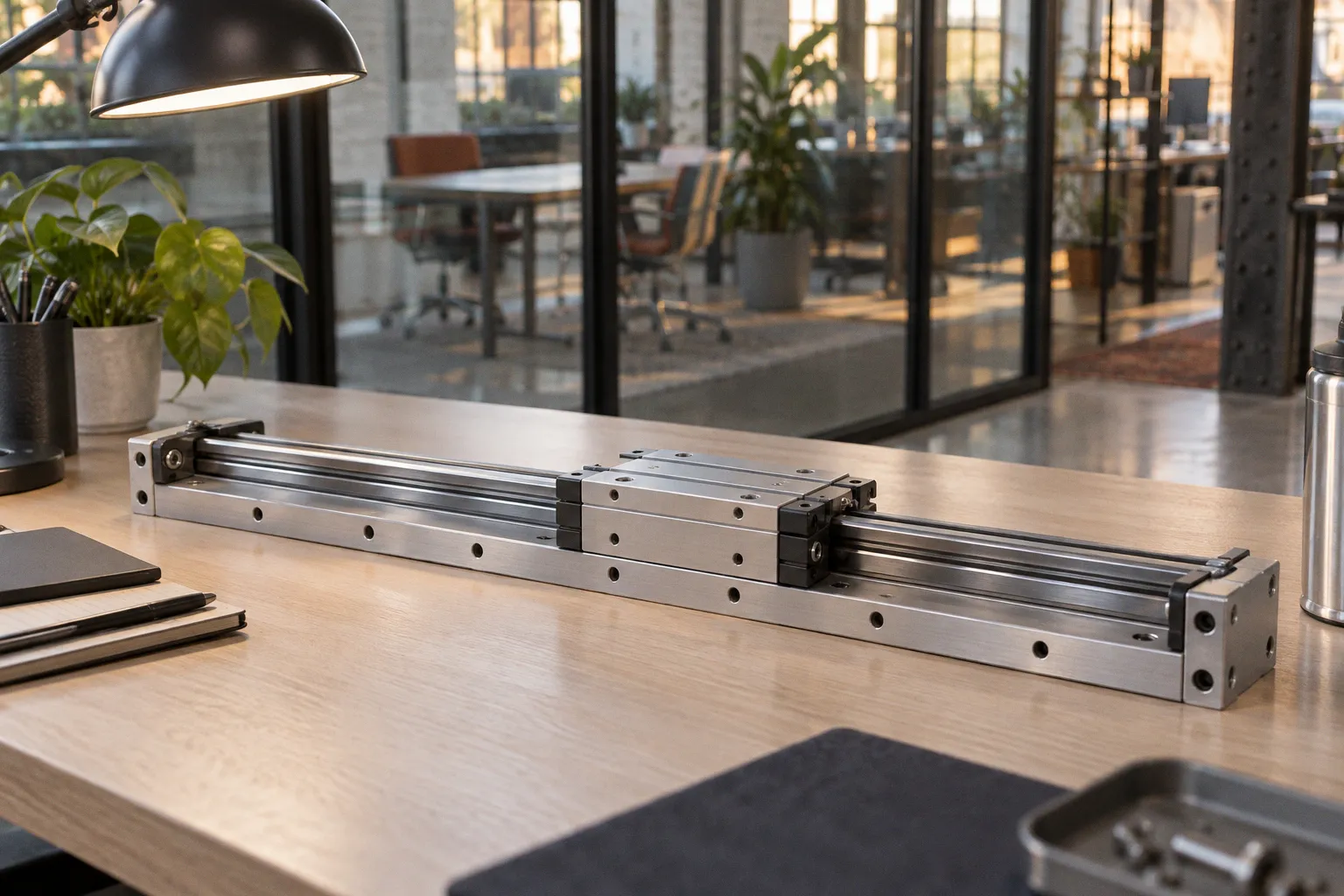
The update extends Beacon's cloud-based visual programming interface so operators can automate complex industrial paths along moving conveyor lines without writing specialized robot code. In practical terms, that means the same drag-and-drop environment teams already use to teach a cobot a basic routine can now choreograph motion across a continuous, traveling product stream and along extended linear rail axes — two scenarios that used to live firmly in the territory of custom scripting and integration consultants.
For anyone who's spent an afternoon watching a perfectly fine cobot stall because the part it was supposed to grab had already moved 200 millimeters downstream, this is the kind of capability that reshapes the conversation from "can we automate this?" to "how quickly can we automate this?"
Why it matters beyond the factory floor
Step back from the cobot itself and the real story is where no-code tooling keeps pushing next. Visual programming started as a way to build internal apps and approval flows. It then spread into data pipelines, customer portals, and document automation. With moves like Hirebotics', the frontier is creeping into physical operations — the part of the business where software decisions literally translate into motion, torque, and takt time.
For business leaders evaluating where to invest their next round of automation effort, the takeaway is less about the specific Hirebotics product and more about the trajectory: vendor after vendor is collapsing the gap between "business problem" and "running software," whether that software moves pixels or moves parts. That shifts the due-diligence question. You're no longer asking whether a non-technical team can configure a workflow; you're asking which platforms give you a credible runway into adjacent domains — industrial automation, AI-assisted schema building, embedded compliance checks — without forcing a rebuild each time.
What to keep on your radar
If Beacon is on your evaluation list, a few practical checks are worth queuing up before you commit real production lines. Confirm how the line tracking feature handles variable conveyor speeds in practice — the press materials describe the capability, not the tolerance bands. Ask whether the linear rail setup flows through the same visual interface or quietly requires a more technical configuration layer. And, as always with no-code industrial tools, pin down what happens when you want to extend beyond what the visual canvas exposes: the speed of that exit ramp determines whether "no-code" remains an honest description a year into deployment.
The broader signal, though, is the one worth sitting with tonight. The same no-code philosophy that lets a marketing operations manager launch a customer app is steadily reaching into the shop floor. For growing businesses, that convergence is where the next layer of practical leverage is going to show up — quietly, one visual workflow at a time.